- That Black Chemist
- Posts
- Summer Research Opportunities Open up at NASA for Atmospheric Science
Summer Research Opportunities Open up at NASA for Atmospheric Science
NASA will be hosting its Student Airborne Research Program (SARP) in summer 2026 for rising senior undergraduates interested in studying the composition of the atmosphere within various regions.

Joseph Sampson
January 23, 2026 • 8 minutes


What’s Happening This Week!
Welcome to a weekly drop from That Black Chemist!
NASA is offering undergraduates a rare chance to experience real-world Earth science through the Student Airborne Research Program (SARP). This fully funded, eight-week summer internship places students on NASA research aircraft and in the field, where they collect airborne and ground-based data, analyze real mission datasets, and design their own independent research projects. With mentorship from faculty and graduate researchers, SARP gives rising seniors hands-on exposure to how large-scale scientific campaigns actually work.
While the rigor in biotech academia and industry stays the same, the culture around data shifts—from academia’s emphasis on deep interpretation and uncertainty to biotech’s focus on decision-making under constraints. Understanding when to slow down, when to move forward, and how to communicate results across disciplines is becoming a critical skill for scientists working in an increasingly translational research landscape.
Stay tuned for more science updates and opportunities from That Black Chemist!
Upcoming Opportunities

✈️ Student Airborne Research Program (SARP) – NASA Summer Internship
NASA’s Student Airborne Research Program (SARP) is an intensive 8-week summer internship for rising-senior undergraduates interested in Earth and atmospheric science. Participants work directly with NASA’s Airborne Science Program, assisting with instruments onboard research aircraft that study atmospheric gases and image land and ocean surfaces. In addition to flight operations, students collect field measurements, analyze NASA datasets, and design their own research projects with guidance from faculty and graduate mentors.
📅 Program Details
Duration: 8 weeks (summer)
Location: East Coast or West Coast, U.S.
Format: In-person, hands-on research
Research Areas: Atmosphere, land processes, oceanography, remote sensing
Capstone: 12-minute scientific research presentation
Register Here: [Website]
✅ Eligibility
Rising-senior undergraduate students
Interest in Earth science, atmospheric science, oceanography, remote sensing, or related fields
⚠️ Bonus Opportunities You Should Know
🧪 NSF REU Summer Research Programs: List of funded undergrad research programs. (Search here)
🎓 Zintellect: List of scholarships, research fellowships, and internship opportunities funded by the U.S. government or private sector. (Search here)
💰 NASA OSTEM Internships: List of NASA Internships for high school and undergraduate STEM students. (More info)
🪖 Department of Defense (DoD) SMART Scholarship: $30,000-$46,000 scholarship awarded to top STEM students. (Link)
🌍 International Opportunities
🧲 Pathways to Science: List of upcoming internships, scholarships, and research programs hosted by any country [open to international students]. (Search here)
🔬 Amgen Scholars Program: Prestigious summer research program for undergraduate students in the U.S., Europe, or Asia. (More info)
⚛️ European Organization for Nuclear Research (CERN): Search for any upcoming internships related to chemistry, physics, engineering, or data science! (Link here)
📤 Share This with a Friend in Need!
Like What You See? Subscribe for More Weekly Content!
Scientist’s Scroll

🔬 Going With the Flow: Navigating Academic vs. Biotech Research Cultures
In academia, research is built to tolerate ambiguity. Experiments are exploratory, negative or unclear results are valuable, and depth of understanding is often the goal. Scientists are encouraged to slow down, question assumptions, and fully characterize biological complexity before drawing conclusions.
Biotech operates under tighter constraints. Data must not only be correct but actionable, guiding clear next steps within limited time and resources. The focus shifts from uncovering every mechanism to determining whether results are consistent and sufficient to responsibly move a project forward.
Everyone Sucks at Math—Until they do Science!

It Only takes 3-4 Weeks to Master Algebra for Science & Engineering!
The hardest part about math isn’t the raw calculations: it’s understanding what the math means when rearranging and graphing functions. Many high school algebra and precalculus courses don’t train students to interpret the math from a qualitative perspective which is why many students who are ‘good at math’ struggle in introductory chemistry, physics, and engineering courses.
That’s why I’ve created the Ultimate Algebra Guide for Science & Engineering Majors which covers all of the relevant concepts from algebra, trigonometry, and precalculus courses that are applicable for science & engineering majors condensed into a 700+ page guide!
You will learn how to graph functions with Desmos and GeoGebra before diving into hundreds of pages detailing the relevant math notes along with application-based problems seen in introductory science and engineering courses.
Click here to access the Ultimate Algebra Guide for Science & Engineering!
Click Here to Access the Algebra Guide!
Confused About Class? Click Here to Book a Tutoring Session with Me!
Tip of the Week
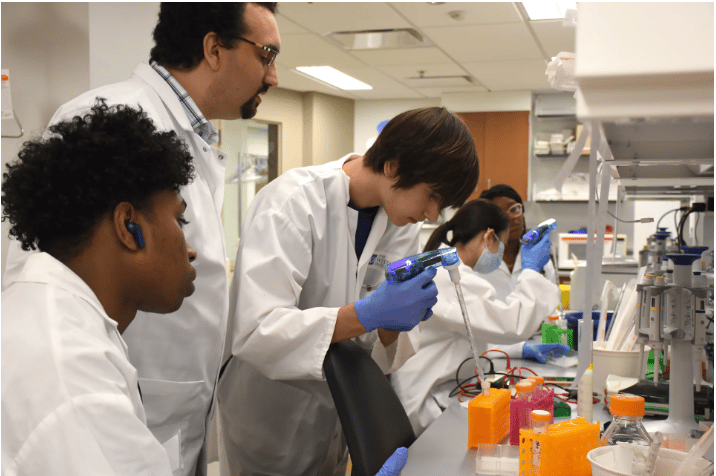
🔬 Build Skills That Matter: Why Undergraduate Research Is a Game-Changer
Classes teach you what we know. Research teaches you how knowledge is made. Getting involved in undergraduate research builds skills and confidence that carry into grad school, industry, medicine, and beyond.
Learn How Science Actually Works: Research exposes you to uncertainty, troubleshooting, and iteration—the real process behind discoveries.
Develop Transferable Skills: You’ll practice data analysis, technical writing, coding, collaboration, and presenting results to different audiences.
Stand Out on Applications: Research experience signals curiosity, discipline, and independence to grad schools, employers, and fellowship committees.
Find Your Direction Early: Hands-on work helps you figure out whether you enjoy bench work, computation, field research, or something else entirely.
Build Mentors, Not Just Résumés: Strong relationships with faculty and grad students often lead to letters of recommendation, opportunities, and career guidance.
Subscribe to explore weekly research opportunities!
Today’s Theme: Fact or Fiction Friday

Congratulations on making it through the work week! Ready to test your science savvy?
👇🏾 Vote if you think the statement below is fact or fiction and tell us why in the comments!
Statement: The stability of atoms can be predicted through their molar mass.
Recommended Newsletters
Thanks for Reading to the End!
If you enjoyed this article, you’ll enjoy these newsletters too!
|

|

|

|

Reply